

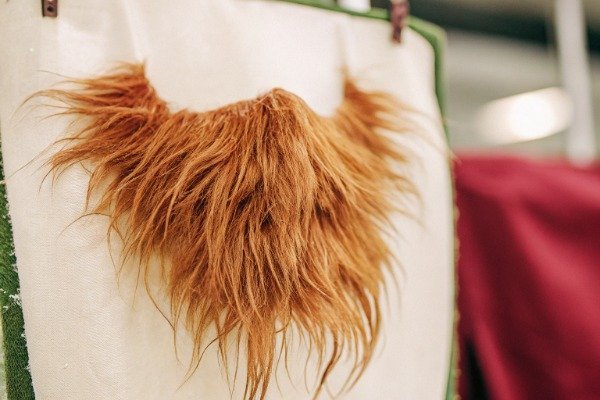
We often see production budgets wasted on cheap fibers that fail on camera, but our workshop experience proves that true period authenticity demands better materials.
Yak hair offers superior realism for period productions because its coarse, organic texture mimics human facial hair without the artificial shine of synthetics. It withstands high-definition scrutiny, allows for versatile heat styling and dyeing, and provides the durability needed for rigorous filming schedules.
Let's examine the specific advantages that make yak hair the industry standard for professional wig makers.
How Does the Texture of Yak Hair Compare to Synthetic Fibers for High-Definition Close-Ups?
When we sort raw materials in our facility, the difference is palpable; synthetics feel uniform, while natural fibers offer the irregularity needed for convincing close-ups.
Yak hair possesses a natural coarseness and irregular surface structure that synthetic fibers cannot replicate, making it indistinguishable from real facial hair in 4K close-ups. Unlike smooth plastic filaments, yak hair's cuticle scales create a matte, organic appearance that holds makeup and blends seamlessly with skin.
The Science of Surface Texture
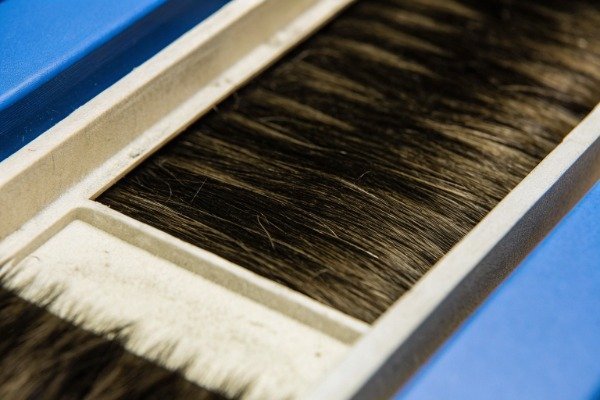
In our processing center, we observe that synthetic fibers, regardless of their quality, are essentially extruded plastic. Under a microscope, they appear perfectly round and smooth. This smoothness is the enemy of realism in high-definition cinematography. When a camera lens zooms in for a tight shot, that perfect uniformity signals to the viewer's brain that the hair is artificial.
Yak hair, conversely, has a medullated structure. It is thicker than standard human head hair but mimics the texture of human facial hair and Afro-textured hair almost perfectly. This is why we recommend it specifically for beards, mustaches, and period wigs that require volume without looking heavy. The surface of the hair shaft is covered in microscopic scales (cuticles). These scales break up the visual line, creating a "fuzziness" that looks organic rather than manufactured.
medullated structure 1
Volume and Weight Distribution
One of the most frequent feedback points we receive from our clients in Europe is about the "lift" of the hair. Synthetic fibers are heavy and tend to lay flat against the head or face unless sprayed with heavy fixatives. Yak hair has a natural crimp and stiffness. This allows the hair to stand up on its own, providing excellent volume with less weight.
For period dramas, where hairstyles were often elaborate or beards were bushy and unkempt, this natural volume is essential. It allows the hair designer to create large shapes that look airy and real, rather than dense and plastic.
Texture Comparison Data
We have compiled data based on our material testing to highlight the physical differences.
| Feature | Yak Hair | Synthetic Fiber (Standard) | Synthetic Fiber (High-Heat) |
|---|---|---|---|
| Surface Structure | Scaled, irregular, organic | Smooth, uniform cylinder | Smooth, slight coating |
| Diameter (Microns) | 80-100 (Variable) | 60-70 (Uniform) | 70-80 (Uniform) |
| Stiffness | High (Holds shape naturally) | Low (Floppy) | Medium |
| Visual Read | Matte, textured | Shiny, plastic-like | Slightly shiny |
| Tactile Feel | Coarse, dry | Silky, slippery | Silky, coated |
Can I Heat Style and Dye Yak Hair More Effectively Than Synthetic Alternatives?
Our clients frequently ask for custom colors, and we always recommend yak because synthetic fibers simply melt or resist color processing during production.
Yak hair is protein-based, allowing it to be bleached, dyed, and heat-styled with professional tools just like human hair. In contrast, synthetic materials often melt under heat and cannot absorb hair dye, severely limiting a stylist's ability to create custom period-accurate looks.
The Chemistry of Color Customization
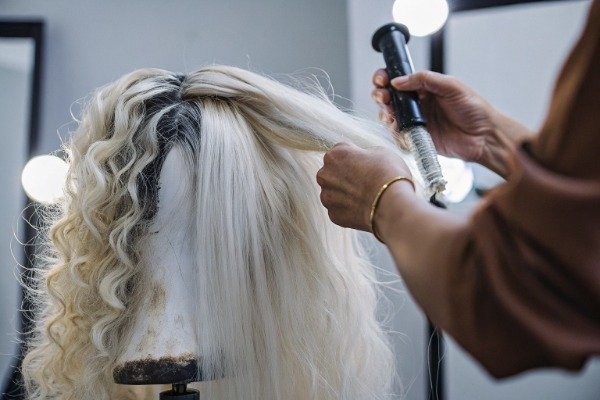
At our factory, we process tons of yak hair annually, and the bleaching process is a testament to the fiber's versatility. We can take natural black or brown yak hair and lift it to a pale yellow or white. This provides a blank canvas for wig makers.
Synthetic fibers are pigmented during the extrusion process. Once the fiber is made, the color is locked in. You cannot dye a black synthetic wig blonde, and even darkening a synthetic wig is difficult because the plastic does not absorb liquid dye; the color just sits on the surface and rubs off.
With yak hair, you can use standard acid dyes or textile dyes. This is crucial for period films where characters age. A wig maker can take a yak hair beard and add "salt and pepper" effects, yellowing from nicotine stains (for character depth), or sun-bleached tips. These subtle color variations are impossible to achieve convincingly with synthetic fibers.
standard acid dyes 2
Heat Resistance and Styling Memory
We often demonstrate to our visitors how yak hair reacts to heat. You can use curling irons, straighteners, and crimpers at temperatures exceeding 200°C (392°F) without damaging the fiber. More importantly, yak hair has excellent "style memory." Once you steam set a curl into yak hair, it stays until it is washed and reset.
Creating Period-Specific Textures
Historical hairstyles often require tight curls (like Victorian ringlets) or specific waves (like 1920s finger waves).
- Boiling: You can wrap yak hair on wooden dowels and boil it to create permanent textures.
- Perming: Since it is protein-based, you can use chemical perms to alter the structure permanently.
Synthetic fibers, even "heat-resistant" ones, have a melting point. If you exceed it, the fiber frizzes and is ruined. They also struggle to hold a curl in humid conditions or under hot studio lights, often drooping by the end of a shoot day.
Styling Capabilities Overview
The following table illustrates the flexibility available to the stylist.
| Styling Method | Yak Hair Capability | Synthetic Capability |
|---|---|---|
| Bleaching | Yes, can be lifted to white | No, color is fixed |
| Dyeing | Yes, absorbs dye fully | No, surface coating only |
| High Heat (200°C+) | Safe, sets style | Melts or frizzes |
| Chemical Perming | Yes, changes structure | No effect or damage |
| Steam Setting | Excellent hold | Weak hold |
| Restyling | Unlimited | Limited lifespan |
How Does Yak Hair Handle Studio Lighting Compared to the Artificial Shine of Synthetic Fibers?
We test our hair batches under strong lights because we know that excessive reflection ruins the illusion of historical accuracy on set.
Yak hair absorbs and scatters studio light naturally, creating depth and dimension, whereas synthetic fibers tend to reflect light, causing an unnatural "plastic" shine. This light absorption is critical for maintaining immersion in period dramas, especially under the intense illumination of modern LED film sets.

The Physics of Light Absorption
In our quality control room, we use bright LED arrays to simulate a film set. The difference between materials becomes immediately obvious. Synthetic fibers act like mirrors. They have a smooth surface that reflects light directly back at the camera. This creates "specular highlights"—bright white spots on the wig or beard. In a dark period scene lit by candlelight or firelight, a glowing synthetic beard looks ridiculous and breaks the viewer's immersion.
Yak hair has a rougher, scaled surface. When light hits it, the light is scattered in multiple directions (diffusion) and some of it is absorbed into the fiber. This is known as subsurface scattering. It gives the hair a deep, rich color rather than a shiny surface.
subsurface scattering 4
The "Black Hole" vs. The "Plastic Doll"
There are two extremes we try to avoid in manufacturing.
- The Plastic Doll: This is the synthetic look. It looks too perfect, too shiny, and lacks texture.
- The Black Hole: Some low-quality human hair can look flat and dull.
Yak hair sits in the perfect middle ground. It is matte, but it has life. It reflects enough light to show texture and movement but not enough to look artificial. This is particularly important for digital cameras. Modern sensors have high dynamic range. They pick up the difference between skin texture and hair texture very clearly. If the hair reflects light differently than the actor's skin, it looks like a prop. Yak hair blends optically with human skin.
high dynamic range 5
Static Electricity and Flyaways
Another lighting-related issue we encounter is static. Synthetic fibers are essentially plastic, which generates static electricity. Under hot lights and dry studio conditions, synthetic hairs can stand up and "fly away," creating a halo effect that catches the light. Yak hair, being a natural fiber, retains moisture better and is less prone to static buildup. This keeps the silhouette of the wig or beard clean and sharp on camera.
Is Yak Hair More Durable Than Synthetic Materials for Long-Term Production Schedules?
We have seen props return to our facility after years of use still in excellent condition, proving that natural fibers outlast cheaper synthetic alternatives.
generates static electricity 6
Yak hair is significantly more durable than synthetic materials, retaining its structural integrity and shape memory through months of daily wear, cleaning, and restyling. While synthetics frizz and degrade quickly, yak hair pieces can serve a production for years, offering better long-term value.
Mechanical Strength and Resilience
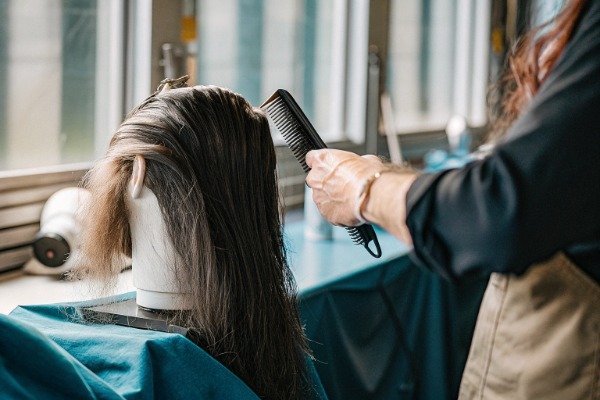
When we process raw yak tails, we are dealing with one of the strongest natural fibers available. Yak live in harsh, high-altitude environments. Their hair is designed by nature to withstand freezing temperatures, wind, and physical abrasion.
In a film production context, a wig or beard is handled roughly. It is glued down, ripped off, washed with solvents to remove glue, re-styled, and sprayed with alcohol every single day.
- Synthetics: The ends of synthetic fibers "friction frizz" very quickly. Rubbing against a costume collar causes the plastic to kink and tangle irreversibly. Once the ends are frizzed, the wig must be replaced.
- Yak Hair: It resists friction. It does not tangle easily because the strands are thick and stiff. If the ends do become dry, they can be conditioned with oil or trimmed slightly, and the piece is good as new.
Adhesion and Lace Longevity
A critical aspect often overlooked is how the hair interacts with the lace base. In our knotting department, we find that yak hair holds a knot better than synthetic hair. The scales on the yak hair provide friction that locks the knot in place. Synthetic hair is slippery; knots can loosen over time, causing the wig to shed.
Furthermore, the solvents used to clean lace (like acetone or alcohol) can damage synthetic fibers over time, making them brittle. Yak hair is impervious to these standard cleaning chemicals. This means the lace piece itself lasts longer because you aren't fighting with shedding hair or melting fibers during cleaning.
microscopic scales 8
Cost-Benefit Analysis for Productions
While our initial price point for yak hair is higher than synthetic, the long-term math favors yak for any production lasting longer than a few weeks.
| Factor | Yak Hair Investment | Synthetic Investment |
|---|---|---|
| Initial Cost | Moderate to High | Low |
| Lifespan (Daily Wear) | 1 – 3 Years | 2 – 4 Weeks |
| Maintenance Required | Washing, Conditioning | Detangling, Steaming (Frequent) |
| Replacement Rate | Low (One piece per season) | High (Multiple duplicates needed) |
| Resale/Rental Value | High (Can be rented out later) | Zero (Trash after use) |
For a procurement manager, buying yak hair is an asset investment. The wig can be washed, restyled, and used for a different character in a future production. Synthetic wigs are usually disposable consumables that end up in the trash after the shoot wraps.
extruded plastic 9
Conclusion
Choosing yak hair ensures on-camera realism, styling freedom, and long-term durability, making it the superior investment for high-quality period productions over disposable synthetic alternatives.
high-definition scrutiny 10
Footnotes
1. Details the specific biological core structure of yak hair. ↩︎
2. Identifies the specific class of dyes suitable for protein fibers. ↩︎
3. Provides context on the animal source of the fiber. ↩︎
4. Explains the physical interaction of light with translucent materials. ↩︎
5. Explains the camera sensor capability mentioned. ↩︎
6. Explains the physical cause of flyaways in synthetic hair. ↩︎
7. Defines the lighting phenomenon that causes artificial shine. ↩︎
8. Describes the outer layer of the hair shaft. ↩︎
9. Explains the manufacturing process used for synthetic fibers. ↩︎
10. Defines the visual resolution standard mentioned in the text. ↩︎
